
Reading Godric, Finally
In which I complete a friend's challenge, admire a masterpiece, and confess which Buechner I love best

Jeff Munroe is to blame for this.
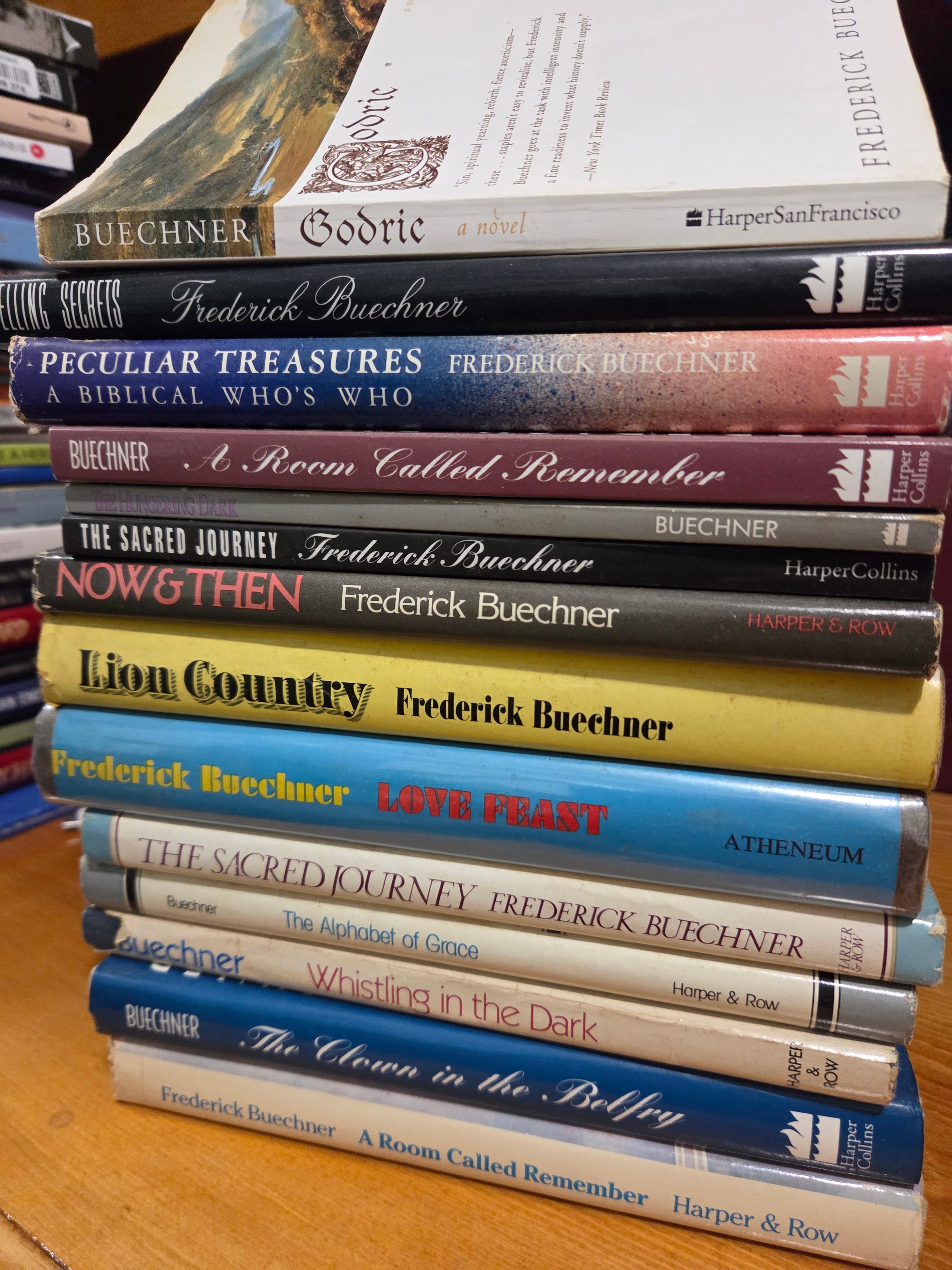
Jeff, editor of the Reformed Journal and author of the book Reading Buechner, wrote what I can only describe as a full-throated tribute to a writer he knew and loved, and somewhere in its pages (or maybe in a conversation after I’d read it) came the challenge: you can’t claim to know Buechner until you’ve read Godric. The novel, published in 1980, was a finalist for the Pulitzer Prize. It’s widely considered his masterpiece. And I, who own twelve or thirteen of Buechner’s nonfiction titles, who quoted him from the pulpit for decades, had never read it.
The truth is, I’d tried Buechner’s fiction before and never warmed to it. The Bebb novels left me cold. This admission feels almost heretical among a certain kind of reader — the kind of reader I mostly am — for whom Buechner occupies a shelf somewhere between literature and scripture. But there it is. The novelist never did for me what the memoirist did.
So I read Godric. Challenge completed.
The Prose Is the Point
Let me say first what the book’s admirers say, because they’re right: the writing is astonishing. Buechner set himself an almost impossible task — to render the inner life of a twelfth-century English hermit in language that sounds neither like a costume drama nor like a modern novelist in period dress. His solution was to build a voice from the ground up: knotted, alliterative, thick with monosyllables, the syntax inverted in ways that feel carved rather than composed. Sustaining that register for an entire novel is elite craftsmanship, and very few writers could manage it. The Goodreads reviews confirm what I experienced: readers find the book difficult, and it is. The difficulty is the price of the achievement.
A Broth of False and True
And the story itself is genuinely provocative. Godric of Finchale was a real historical figure, a rogue and river pirate who became a saint, and Buechner refuses to sand down either half of the man. The novel’s whole argument is that sanctity and squalor share a body — that, as Godric himself puts it, “nothing human’s not a broth of false and true.” Anyone who has spent decades in ministry knows how true that is, of saints and of pastors alike.
So why didn’t I love it?
Admiration Isn't Usefulness
Here is the distinction I keep circling: I admired Godric, but I never found it useful. Buechner’s nonfiction — The Sacred Journey, Telling Secrets, Wishful Thinking — worked. Those books preached. They gave me language for grace that helped actual people in actual pews, and his memoir style shaped my own development as a memoirist more than I can easily measure. The novels, even this best of them, ask to be admired instead. That may say more about me than about Buechner. But after forty-five years of ministry, I’ve come to trust usefulness as a measure of a book’s worth, and I won’t apologize for it.
Same Gospel, Harder Road
The strange thing is that Buechner the novelist and Buechner the memoirist were doing the same work — telling secrets, insisting that the crude stuff of an ordinary life is exactly where grace hides. In the memoirs, he told me that directly, in his own voice, and I believed him. In Godric, he told me through a dying hermit speaking a language I had to fight my way into. Same gospel, harder road.
Jeff, I finished the book. I’m glad I read it. And I’m going back to the memoirs now, where Buechner and I have always understood each other best.
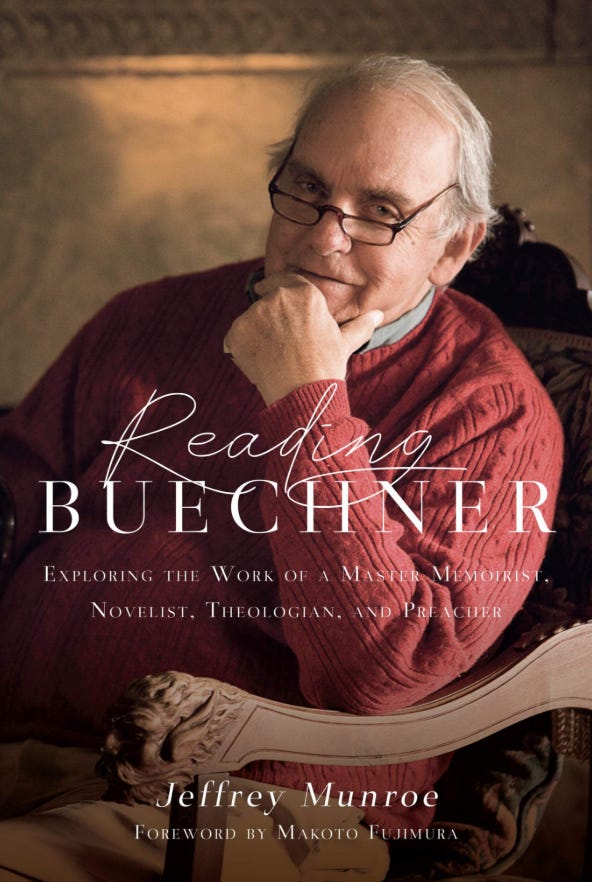
Buechner’s 100th birthday would have been today, Saturday, July 11, and the Reformed Journal will be adding a tribute to celebrate his writing and his life. Here’s the website.
I love Godric. Agree with you on the Bebb novels - I could never get a handle on those. Great review!
What a delight! Someone who has read Godric! Even if it wasn’t your cup of tea, your posting here caused me to get out my well worn copy to re-read my underlines…and sigh with the reminder of deep relief. Buechner’s prose leads me in but Godric’s humility and honesty give me permission to fall into God’s grace and mercy just as I am.
Godric’s definition of prayer , (on my page 142) with one exception, says it well.