
The Resistance
Would I have been one of the few, like Corrie ten Boom, who resisted? That question has new urgency.

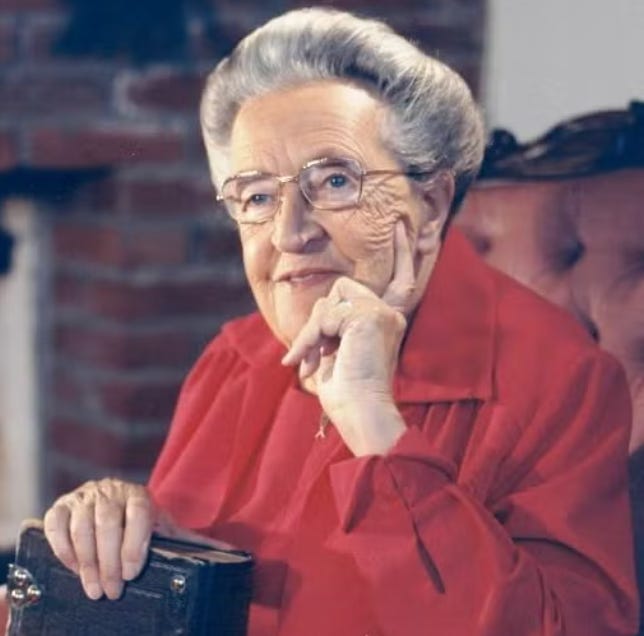
Corrie ten Boom was a hero in the Dutch-American culture in which I was raised.
In The Hiding Place, she describes how her family hid and protected many Jewish families from the Nazis during World War II. Ten Boom herself was eventually arrested and sent to the Ravensbrück concentration camp in Germany. She somehow survived, and after the war she wrote about her experiences and told her story to admiring audiences in more than 60 countries.
Most people I knew back then liked to imagine that, if they found themselves in similar circumstances, they would have resisted…just like ten Boom.
But the truth is that only a tiny minority of people in Germany (and the Netherlands, where ten Boom lived) resisted. Most people collaborated with the Nazis. In fact, it was a Dutch informant, Jan Vogel, who told the Nazis what the ten Boom family had been doing, leading to their arrest and imprisonment.
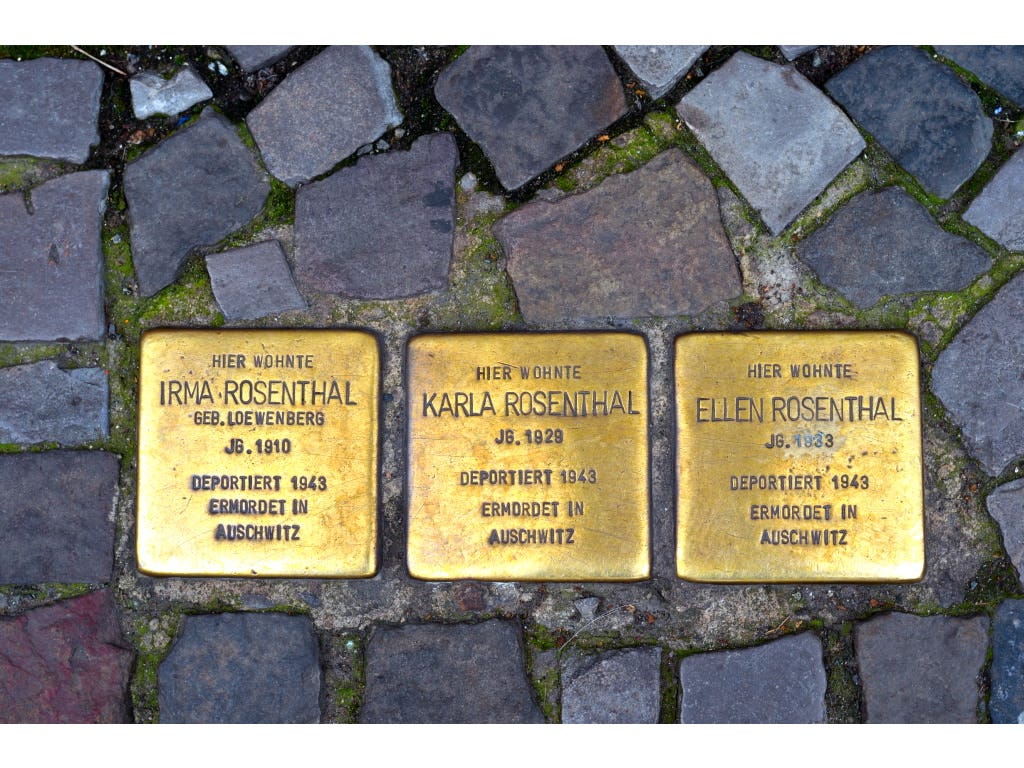
I had not thought much about ten Boom’s story until July 2016 when I found myself living in Berlin and taking German language classes (for my Swiss work permit). During noontime walks around the Goethe Institute, I stumbled upon my first set of Stolpersteine, which is the German word for “stumbling stones.” They are 10cm x 10cm brass plates installed in front of the last known address of people who were arrested and deported by the Nazis.
In addition to Jews, the Nazis also arrested Sinti and Romani people (often called “gypsies”), Poles, homosexuals, the physically or mentally disabled, Jehovah’s Witnesses, members of the Communist Party, the anti-Nazi Resistance, the Christian opposition, Freemasons, conscientious objectors, “habitual criminals,” and others.
More than 100,000 Stolpersteine have now been installed in 26 countries throughout Europe, and they are sobering reminders (especially in Berlin which once had a very large Jewish population) of what came to be known as the Holocaust. They are the work of German artist Gunter Demnig, who has overseen nearly every installation.
When I returned to Europe in 2022-2023 to serve as an interim pastor in The Hague, I once again encountered Stolpersteine, this time on the street I walked each day to and from my church.
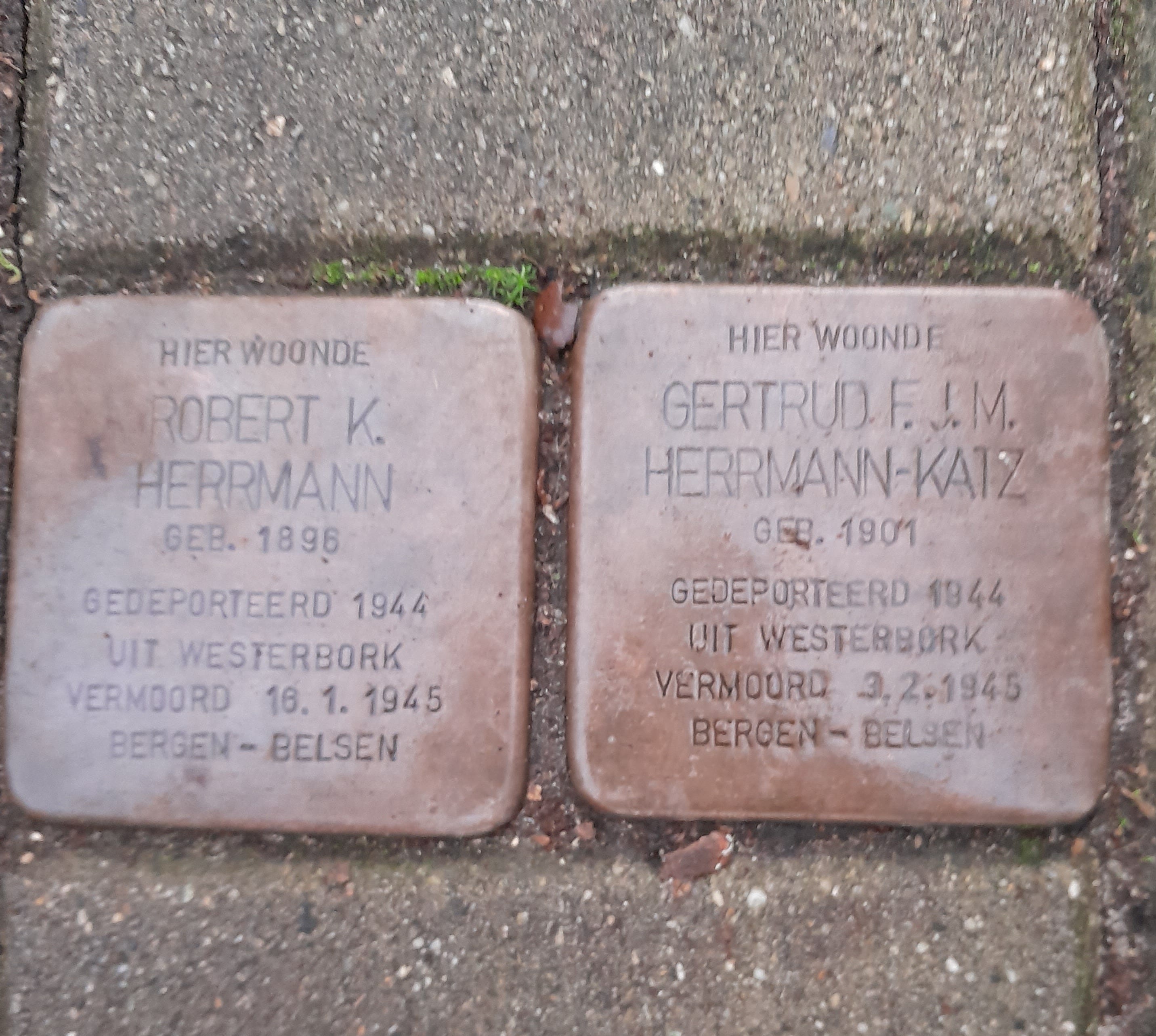
Here lived Robert K. Herrmann, born 1896, deported 1944, murdered January 16, 1945, Bergen-Belsen.
Here lived Gertrude F.J.M. Herrmann-Katz, born 1901, deported 1944, murdered February 3, 1945, Bergen-Belsen.
Seeing their names every day, I came to think of them as my neighbors. One day I brushed away some pine needles and leaves in order to take a photo. I knelt in front of them, as if in prayer.
Robert and Gertrude lived in a very nice rowhouse, much like the one where I lived, and I could imagine waving to them as I walked by each day. The question I found myself asking was, Would I have done anything — anything at all — to protect my neighbors from deportation?
Watching videos of masked ICE agents snatch men, women, and teenagers from the streets of Minneapolis, I find myself asking the same question, with renewed urgency, mostly because it is no longer an abstract question. Sadly, deporting unwanted groups of people is a present reality.
Will I have the courage of Corrie ten Boom, who was once held up as a role model for me? Or will I tell her (and the Dutch-American people who once adored her) to “let law enforcement do their job”?
Photos: (top) Robert and Gertrude Herrmann were my “neighbors” in The Hague. (middle) Corrie ten Boom. (bottom) These Stolpersteine were the first ones I ever encountered — on a sidewalk near the Goethe Institute in Berlin. They memorialize a mother and two daughters (ages 10 and 14) who were arrested, deported, and murdered in Auschwitz. (I owned a fancier camera in 2016 and took a better photo.)
I am asking myself this question every day as the possibility draws nearer. I hope so, when the time comes.
You or me alone resisting, perhaps not. Together, my brother, we must and we will.