
Water
Europe is sweltering

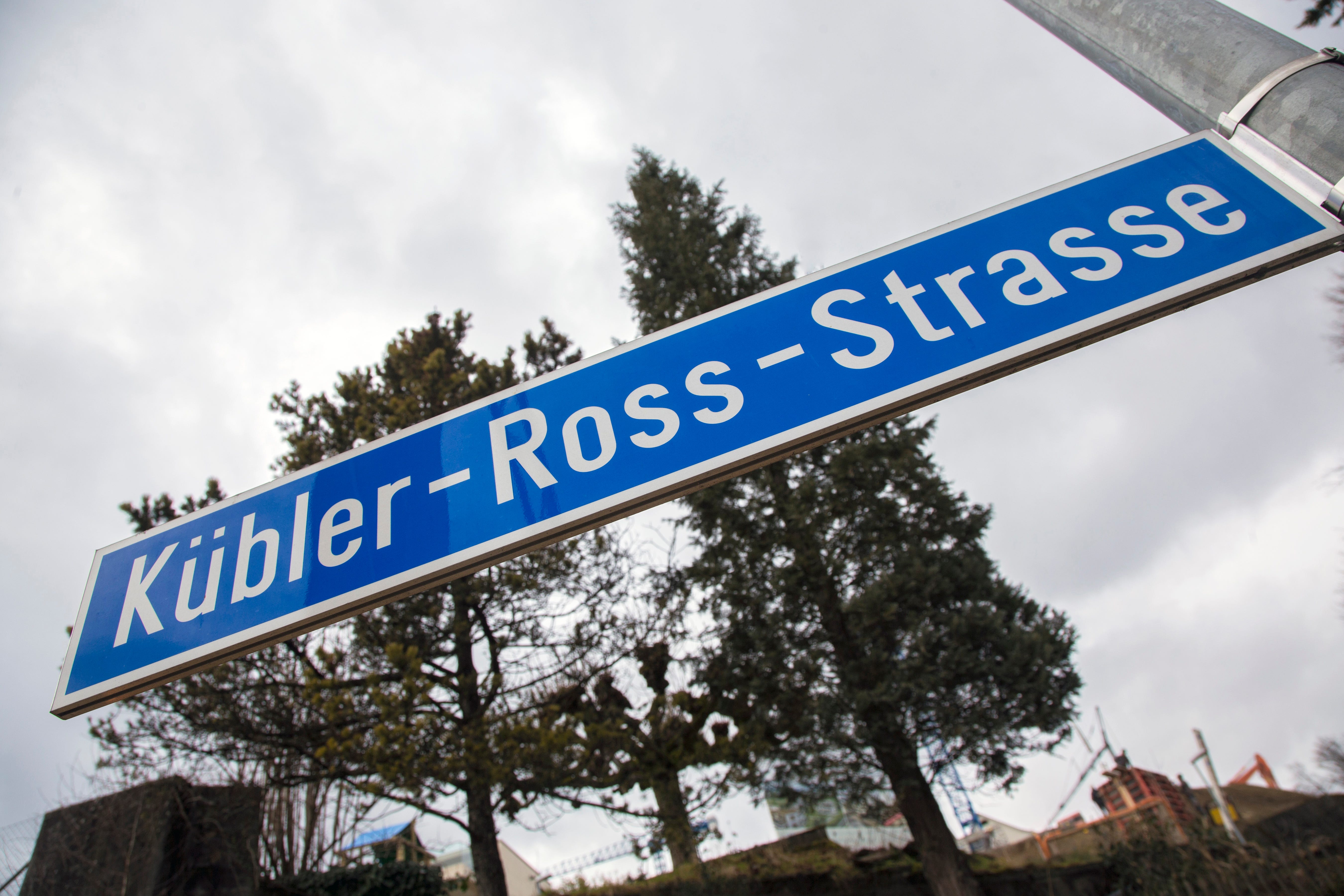
The news is full of it — heat records broken across the continent, fountains crowded with tourists, churches thrown open not for worship but for shade. I read the reports and found myself thinking about Meilen, the small Swiss village on Lake Zürich where Susan and I lived for nearly five years, and about summer evenings when the heat finally broke and the neighbors walked down to the lake.
My neighbor Elisabeth Kübler-Ross
Meilen is the kind of place that doesn’t call attention to itself. Neat houses, a train station (for my daily commute to Zürich), a view of the water that never gets old. It was also the home village of Elisabeth Kübler-Ross, who famously identified the five stages of grief and was named one of Time magazine’s 100 most important thinkers of the twentieth century. I mention this as a fellow Meilen author, though my own street-naming prospects remain, at present, uncertain.
What I remember most about Meilen in summer is the evening ritual. When the heat had been building all day and the air finally softened toward dusk, people would walk to the small, gravelly beach at the edge of the village, take off their clothes without any apparent self-consciousness, and wade into the lake to cool off. It was entirely ordinary. No one made anything of it. The Swiss relationship with the body — particularly the body in water — is matter-of-fact in ways that took this modest Midwesterner some time to absorb.
There was also the Frauenbad in Zürich, the women’s bathing area where, on hot afternoons, women would sunbathe on the docks. Just out of sight, as I was always careful to note.
I say all of this to establish that Lake Zürich in summer is a place where the body is entirely at home. Which makes it, I now think, a perfectly natural setting for a baptism.
My only time actually in the lake — not merely admiring it from shore — came when a young woman in our congregation asked to be baptized by immersion. She had grown up in Africa, in a tradition where baptism meant going all the way under, and sprinkling simply would not do. She wanted the full experience. She wanted what the tradition calls burial and resurrection — the whole sign, not just a suggestion of it.
A YouTube tutorial
I was glad to say yes. There was only one problem. I had never baptized anyone by immersion. I was Reformed. We sprinkle. Usually babies.
So I did what any self-respecting Dutch Reformed guy does when confronted with a gap in his practical theology: I watched YouTube videos.
I will not pretend this was my most dignified moment in ministry. But I studied carefully, practiced the posture, learned where to put my hands, and on a summer Sunday afternoon waded into Lake Zürich while twenty or thirty members of the International Protestant Church gathered on the shore.
I performed the baptism without dropping her.
A baptism in Lake Zürich
What I was not prepared for was what happened when she came up out of the water. She rose shouting, arms raised, overcome with a joy so complete and unguarded that it stopped everything. The congregation on shore — Swiss, German, Dutch, American, Indian, Thai, and a bunch of other nationalities besides — went very quiet for a moment, and then broke into something that was equal parts laughter and tears.
I stood there in the lake and felt that I had just witnessed something I hadn’t known to ask for.
I have been a pastor for a long time. I have officiated at more baptisms than I can count, most of them decorous, many of them moving, a few of them featuring sounds — the infants especially — that had nothing to do with joy. But I have never forgotten that afternoon in Lake Zürich. The water. The shouting. The arms raised in triumph and joy.
Elisabeth Kübler-Ross spent her life helping people find words for their grief. She is remembered, rightly, for that. But the lake in front of her home village holds more than grief. On one summer afternoon, it held something closer to the opposite.
I think she would have recognized it.
The street in Meilen still bears her name. The lake is still there. And somewhere, still living and working in Zürich, the young woman who came up out of the water, with arms raised and shouting, is still finding her new life.
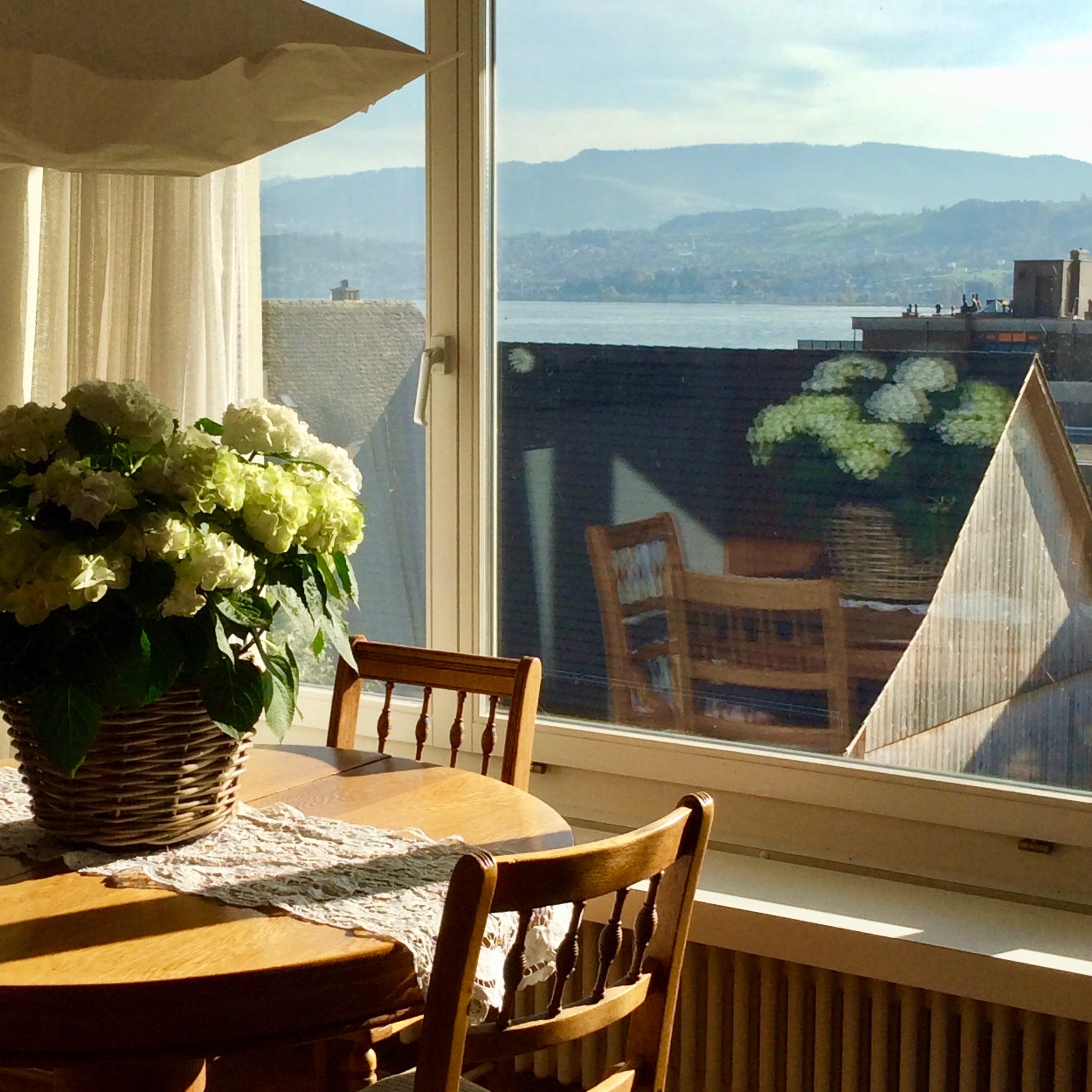
Photo: (above) That’s Kübler-Ross-Strasse in Meilen. (below) That was our view of Lake Zürich.
What a story! What writing!
Beautiful story Doug